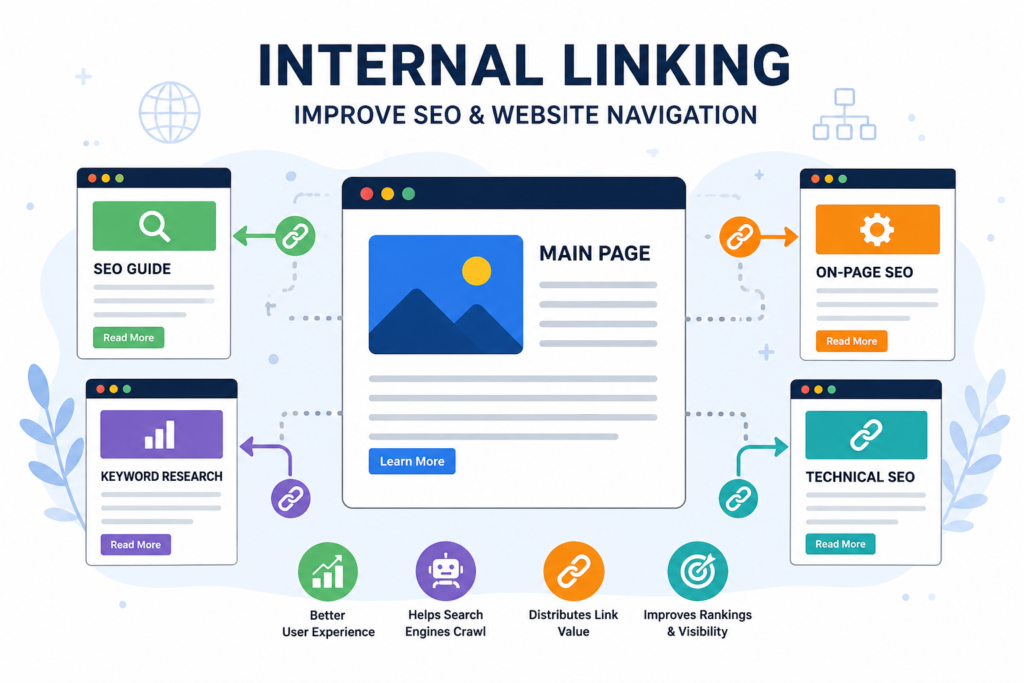
When people think about SEO, they usually focus on keywords, backlinks, technical SEO, and content. However, one simple strategy that is often overlooked is internal linking. Internal linking is an important part of SEO because it helps search engines understand the structure of a website while also helping visitors discover useful content.
An internal link is a link that connects one page of a website to another page on the same website. For example, if you have a blog about SEO and another page about digital marketing services, you can add a link from the SEO blog to your digital marketing page.
What Is Internal Linking?
Internal linking means creating links between different pages or posts within the same website. These links help users move from one piece of content to another without leaving the website.
For example, a blog about Meta Ads could contain a link to another article about social media marketing. This gives readers additional information related to the topic they are already reading.
Internal links can be added to blog posts, service pages, product pages, landing pages, and other important sections of a website.
Why Is Internal Linking Important for SEO?
Internal linking provides several benefits for both users and search engines.
First, it helps search engines discover and crawl pages on your website. When pages are connected properly, search engine crawlers can follow these links and understand how different pages are related.
Second, internal links can help distribute link value throughout a website. Important pages can receive links from other relevant pages, which may help search engines understand their importance.
Internal linking also improves the overall structure of a website. A well-organized website is easier for both visitors and search engines to understand.
How Internal Linking Improves User Experience
SEO is not only about search engines. A good website should also provide a useful experience for visitors.
Imagine someone reading a blog about SEO but wants to learn more about keyword research. If your blog contains a relevant internal link to a keyword research article, the visitor can easily continue learning.
This can encourage visitors to explore more pages and spend more time on your website.
Internal links should always be relevant and useful. Adding too many unrelated links can make the content difficult to read and may reduce the quality of the user experience.
Best Practices for Internal Linking
There are several simple practices businesses can follow when creating internal links.
1. Use Relevant Links
Always connect pages that are related to each other. A blog about SEO can link to content about keyword research, on-page SEO, technical SEO, or backlinks.
2. Use Descriptive Anchor Text
Anchor text is the clickable text used for a link. Instead of using generic text such as “click here,” use descriptive phrases such as “learn more about on-page SEO.”
Descriptive anchor text helps users understand what they will find after clicking the link.
3. Link to Important Pages
Your most important pages should be easy to find. Consider linking to important service pages, category pages, and useful resources from relevant blog posts.
4. Avoid Excessive Linking
Internal linking is useful, but adding too many links can make a page look cluttered. Focus on adding links where they provide genuine value to the reader.
5. Check Your Links Regularly
Broken internal links can create a poor user experience. Regularly check your website and fix or update links that no longer work.
Internal Linking and Content Strategy
Internal linking works best when it is part of a broader content strategy. Businesses can create groups of related content around important topics.
For example, a digital marketing website could have a main page about SEO and supporting articles about keyword research, on-page SEO, technical SEO, local SEO, and link building.
These related articles can be connected using internal links. This creates a clear content structure and makes it easier for visitors to discover information.
Conclusion
Internal linking is a simple but powerful SEO technique. It helps search engines crawl and understand your website, improves navigation, connects related content, and helps visitors discover more useful information.
A successful internal linking strategy does not require hundreds of links. The key is to use relevant, natural, and descriptive links in the right places.
By regularly reviewing your website structure and connecting related pages, you can create a better experience for users while building a stronger SEO foundation for your website.
For more information about digital marketing, graphic design, video editing, and creative services, visit https://ashiif.com/.
Lorem ipsum dolor sit amet, consectetur adipiscing elit. Ut elit tellus, luctus nec ullamcorper mattis, pulvinar dapibus leo.